December means trains, buses and hill stations. It also means a journey of six, eight or ten hours with a toilet you may not get to use, and a period that does not check your itinerary.
Most travel advice for women says to carry pads. True, and not enough. Here is what a long journey changes, and what is actually available along the way.
The four hour problem
The usual guidance is to change a pad about every four hours. A 2019 IANS report on menstrual hygiene, carried by Business Standard, gives the same figure and warns that trapped heat and sweat can cause rashes and encourage bacterial growth. In winter you sweat less, but the rule does not go away because the weather is cooler.
Now look at the trip. A Pune to Goa bus is around eleven hours. A Delhi to Manali overnight bus runs about the same. If your last change was before you boarded, you have gone well past four hours before the first proper stop. So the real question is where the next change happens, not whether you packed a pad.
What to carry
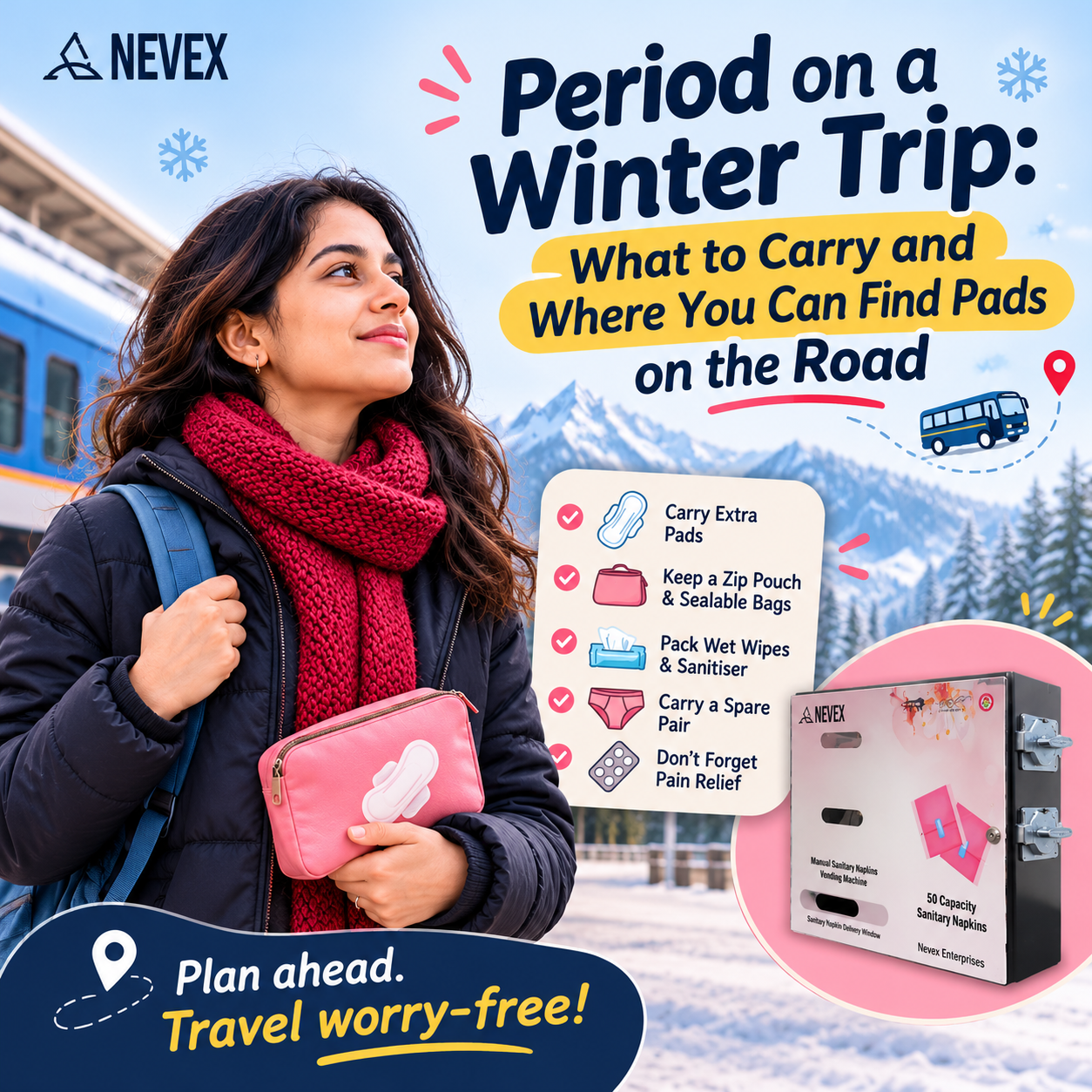
- Three or four pads, more than you think you need. Delays happen.
- A small zip pouch and a few sealable bags for used pads. Many bus stop toilets have no bin.
- Wet wipes and a small hand sanitiser, since taps may be dry.
- A spare pair of underwear and a thin dark layer you can tie around the waist.
- Your usual pain relief, if you take it, in your handbag and not in the luggage hold.
- A pad worn before you leave, if your period is due within a day or two.
Plan your changes around stops
Do not wait for your body to tell you. Before a long ride, look at the route for the longer halts, usually the dhaba stop in the middle. Change before you board, at the main halt, and again on arrival. If the driver says the next stop is two hours away, use the one in front of you.
Where machines now exist along the road
Facilities are patchy, but some are real. On 23 June 2026, ANI reported that Indus Towers and Northern Railways had installed 500 sanitary napkin vending machines at 175 stations across the Delhi, Firozpur, Ambala, Moradabad and Lucknow divisions, and said about 3 crore napkins had been dispensed. Kerala's WOMAN project, launched in October 2026, places machines in KSRTC bus terminals and depots, with three pads priced at ten rupees.
If you are travelling in those areas, look for a machine at the station or terminal. Do not rely on it. Carry your own, and treat a machine as a backup.
For travel businesses, hotels and bus operators
A woman remembers where she was able to change comfortably on a long trip. A highway restaurant, a hotel or a bus terminal with a stocked machine and a covered bin in its women's washroom is giving her something she will mention later.
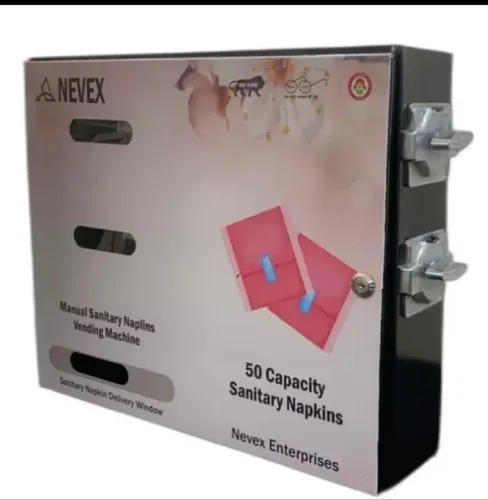
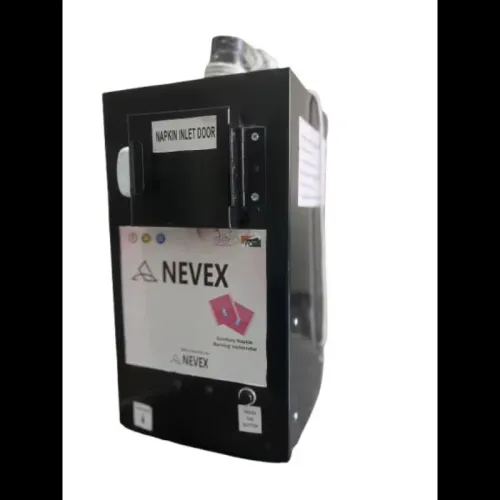
Nevex manufactures sanitary napkin vending machines, disposal machines and incinerators in Pune, with installations running since 2018 in schools, universities, factories and offices. Our 50 Capacity Automatic Sanitary Pad Vending Machine suits a washroom with steady footfall.
If you run a highway stop, resort or terminal, write to info@nevex.in or call 9146694504 and tell us how many women use your washroom on a busy day.
Pad change guidance is as reported by IANS via Business Standard (2019). Railway machine figures are as reported by ANI (23 June 2026). Journey times are approximate.
Keywords