The Environmental Impact of Improper Sanitary Pad Disposal
We throw away a pad and never think about it again. But it does not just disappear. It goes somewhere. And what happens next is sad, honestly.
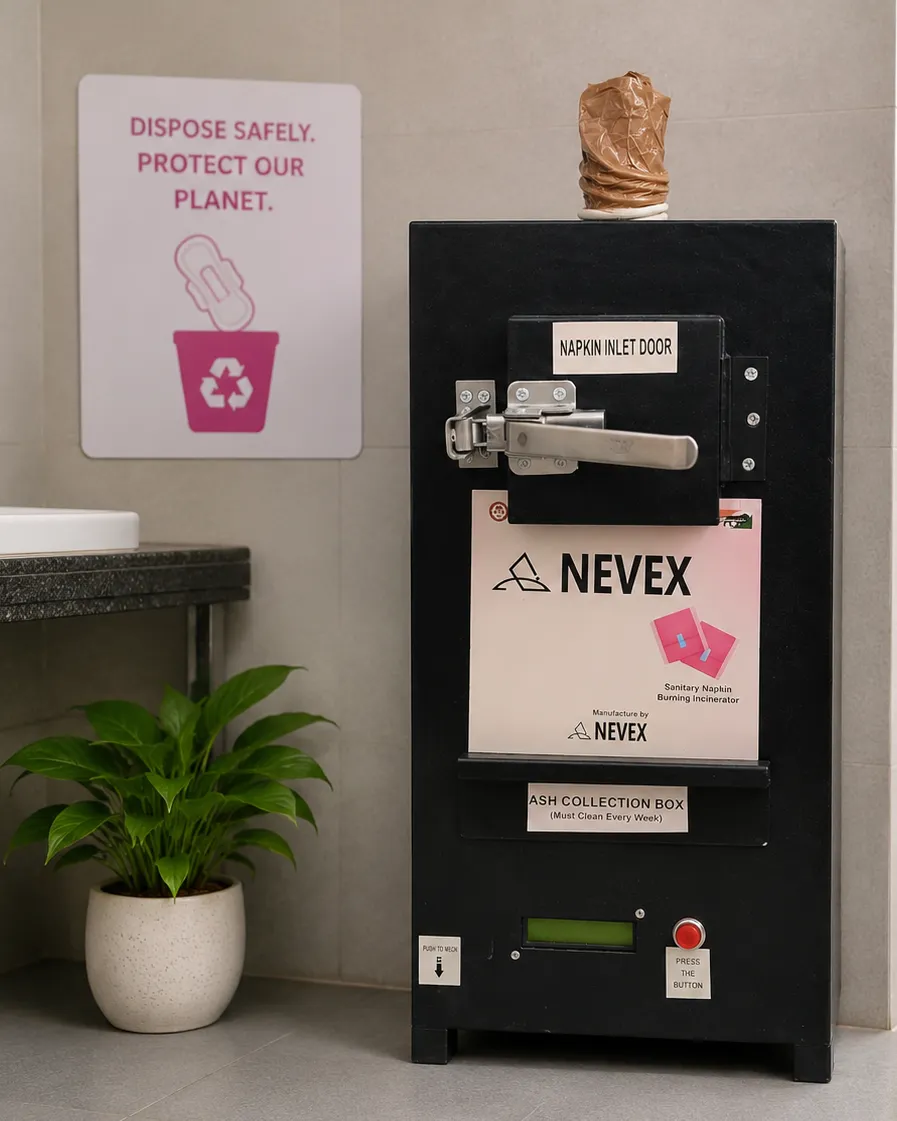
At Nevex, we make machines that dispose of used pads safely. So we think about this a lot. Let's talk about it in a simple way, the way it really is.
A pad does not go away, it just stays
Here is something that will shock you. A normal pad is almost 90% plastic. Not just the wrapper. The pad itself.
Plastic does not break down fast. A single pad can take 500 to 800 years to fully go away. Think about that. A pad thrown today will still be sitting in the ground hundreds of years from now, long after we are all gone. That is hard to even imagine.
And we are not talking about one pad. We are talking about billions of them, every single year, in India alone. That is a lot of plastic that just... stays.
It goes into the soil and the water we drink
When a pad is buried, it does not just sit there quietly. Slowly, its chemicals leak into the soil around it. Over time, this can even reach the groundwater, the same water that some people pump from wells to drink.
That means a small used pad in the ground today can quietly affect the water and soil for a very long time.
Burning it wrong hurts the air we breathe
Burning waste at a very low heat, in an open or unsafe way, lets out toxic gases into the air. These gases can travel and affect the air that children, teachers, and families breathe every day.
Proper disposal, done at the right temperature and in the right way, avoids this problem completely. It is a small difference in method, but it makes a big difference to the air around us.
It even reaches the fish in the sea
This part feels almost unbelievable, but it is true. When sanitary waste ends up in rivers or near the coast, it slowly breaks into tiny plastic pieces called microplastics. Fish and sea creatures eat these tiny pieces by mistake. And then, sometimes, that same fish ends up on someone's plate.
So waste from a bathroom, far away, quietly finds its way back into our food. It sounds strange, but that is exactly what is happening.
Why does this problem keep happening?
Mostly because pads are used by almost everyone, but a proper, safe way to get rid of them is still missing in a lot of places. Most cities do not separate this waste from regular household garbage, so it all ends up mixed together and travels to the same landfills as everything else.
None of this is anyone's fault for simply using a pad. It just means we need better ways to dispose of them, right at the source, before they ever reach a landfill.
What can actually be done
- Dispose of pads through a proper, high-heat, closed system, not an open fire
- Handle pads right there in schools and offices, so they never mix with regular household trash
- Choose disposal methods that are built and tested for safety
- Support brands and institutions that are open about how they manage this waste
This is where Nevex comes in
This is the exact problem we work on every day. Nevex makes sanitary pad disposal machines for schools, colleges, hospitals, and offices. These machines dispose of used pads safely, right on the spot, so the waste does not have to travel far or sit in the ground for hundreds of years.
If your school or office wants a real, safe way to handle this, talk to Nevex. We will help you set up something that keeps people and the planet safe.
Simple answers to common questions
Why are sanitary pads bad for the environment?
Because most pads are almost 90% plastic and take 500 to 800 years to break down. As they sit in the ground, they can also let out chemicals into the soil and water.
What happens when pads are disposed of the wrong way?
Burning waste at very low heat can release toxic gases into the air, which affects the air quality around homes and schools nearby.
Do sanitary pads affect fish and the ocean?
Yes. When this waste reaches rivers or the sea, it slowly turns into tiny plastic pieces that fish accidentally eat. Over time, this can even reach our own food.
Is it safe to bury used pads in the ground?
Not really. Chemicals from the pad can slowly leak into the soil and groundwater over a long period of time.
What makes a disposal method safe?
A safe disposal method uses the right temperature and a properly built, closed system, so waste is destroyed without releasing harmful gases into the air.
How can schools and offices dispose of pads the right way?
By using a proper sanitary pad disposal machine on-site, used pads are destroyed safely, instead of being thrown in with regular trash.
Keywords