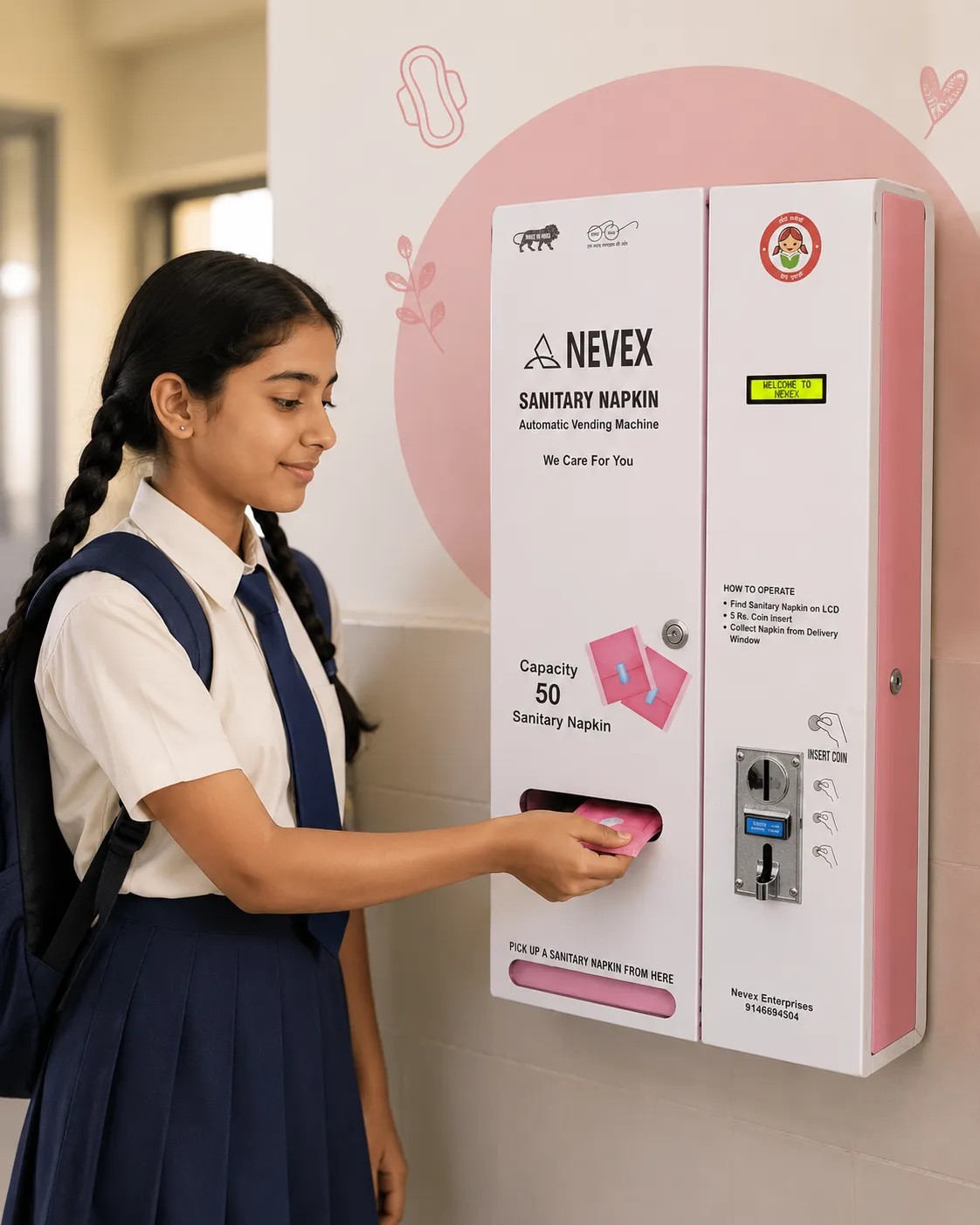
How Easy Access to Sanitary Pads Improves Girls' Education
Give a girl a sanitary pad whenever she needs one, no asking, no waiting, no travelling to a shop, and something simple happens. She stays in school that day. Multiply that across a school year, and the numbers start to look dramatic.
At Nevex, we manufacture sanitary pad vending machines and sanitary pad disposal machines for schools and colleges across India, so we've watched this play out in real campuses. Here's what the evidence, and our own experience on the ground, actually shows.
Does easy access to sanitary pads really improve school attendance?
Yes, and the effect is bigger than most people expect. A study that tracked schools in Kerala after sanitary pad vending machines were installed found that dropout rates among 7th-grade girls fell by roughly 24 percentage points, and attendance rose by about 23 percentage points, once free, monthly access to pads was in place. The researchers noted the impact was strongest among girls from rural schools, public schools, and backward-caste communities, which are exactly the groups that face the highest cost barriers to buying pads in the first place.
That's not a small nudge. That's a structural fix, solving one physical gap and watching attendance move in response almost immediately.
Why does something as simple as a pad have that much impact?
Because for a lot of girls, the barrier was never awareness. It was accessible. When a pad isn't available on campus, a girl on her period has to either manage without one or skip school entirely for that day. Do that for a few days a month, and it adds up to a meaningful chunk of lost classroom time over the year, time she can't easily make up.
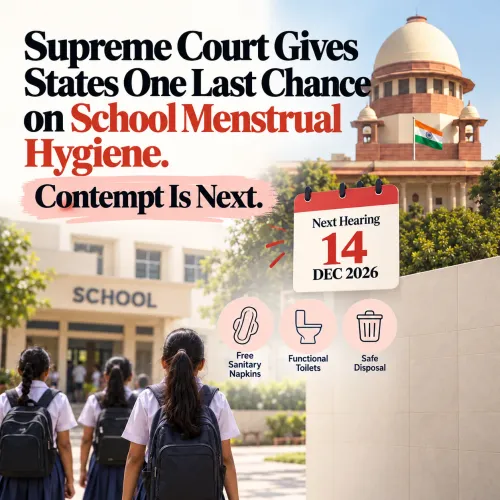
This is also why national data on toilets tells a similar story. Government data shows that only around 42% of schools in India have separate, usable toilets for girls, and even where they exist, many are missing doors, running water, or a safe way to dispose of pads. So access isn't just about the product itself, it's about the whole setup, a pad, a private toilet, and a hygienic way to throw it away, all working together.
What happens when schools remove that barrier?
Attendance goes up, and so does something less measurable but just as important, confidence. A girl who knows a pad is available if she needs one isn't spending her school day distracted or anxious about a leak. She's actually present, in class, in sports, in conversations, instead of managing a problem quietly on her own.
Research on menstrual hygiene interventions in schools has consistently found the same pattern, when access improves, hygiene practices improve alongside it, girls become more open to switching from cloth to sanitary pads, and school-related anxiety around periods drops.
So what does 'easy access' actually look like in a school?
It's not a one-time donation drive. Real, sustained access means:
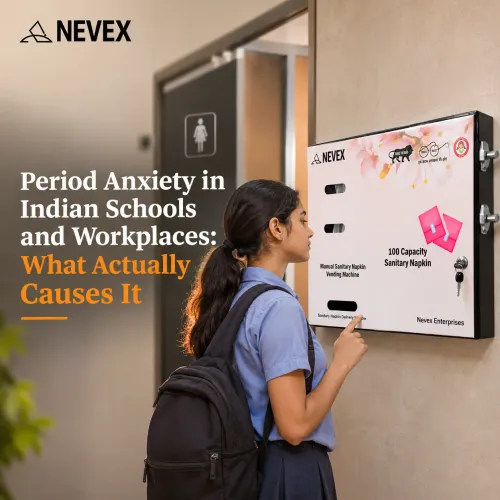
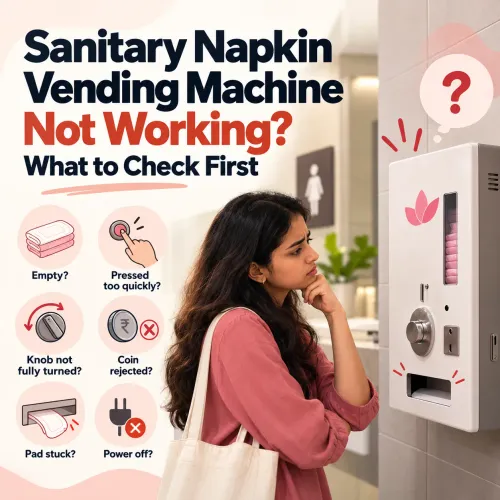
- A sanitary pad vending machine installed directly in the girls' washroom, so a pad is available the moment it's needed, with no need to ask a teacher or leave school
- A sanitary pad disposal machine in the same space, so the pad can be thrown away hygienically, without ending up in an open bin or blocking a drain
- A private, clean toilet, with water and a lock, since access to a pad means very little without somewhere private to use it
- Consistent restocking, not a one-time supply that runs out after a few weeks
Put together, this is what actually keeps a girl in school on the days that matter.
Where Nevex fits into this
This is exactly the gap we work to close. Nevex builds automatic and manual sanitary pad vending machines for schools and colleges, available in 25, 40, and 50 pad capacities, running on a simple push-button mechanism nothing that slows a student down. That matters especially for schools and CSR-backed programmes that want to offer pads for free, without adding friction at the point of need.
Alongside that, we manufacture sanitary pad disposal machines, so a school can offer both access and disposal in the same washroom, a full menstrual hygiene setup instead of half of one.
We've supplied these machines to schools, colleges, and institutions across India as part of women's hygiene and CSR initiatives, and we've seen firsthand how quickly attendance and comfort improve once the physical barrier is actually removed.
If your school or institution wants to see this kind of impact on your own campus, get in touch with Nevex. We'll help you work out the right sanitary pad vending and disposal setup for your students.
Frequently asked questions
Does providing free sanitary pads in schools reduce dropout rates?
Yes. A study across schools in Kerala found that installing sanitary pad vending machines led to roughly a 24 percentage point drop in dropouts among 7th-grade girls, alongside a 23 percentage point rise in attendance.
How does lack of access to sanitary pads affect girls' education?
Without reliable access, girls often skip school during their periods rather than manage without a pad. Over a school year, these missed days add up to a real, measurable loss in classroom time.
What percentage of schools in India have separate toilets for girls?
Government data indicates only around 42% of Indian schools have a separate, usable toilet for girls, and many of those still lack water, doors, or proper disposal facilities.
Is providing sanitary pads alone enough to improve school attendance?
Access to pads has the biggest measurable impact, but it works best alongside a private, clean toilet and a proper disposal facility. Without all three, the improvement in attendance tends to be smaller.
How can schools ensure consistent access to sanitary pads?
By installing a sanitary pad vending machine that's regularly restocked, rather than relying on occasional donation drives, which tend to run out and leave the same gap a few weeks later.
Can CSR programmes fund sanitary pad vending machines in schools?
Yes, many schools and colleges get these machines installed through CSR-backed women's hygiene programmes, which is exactly the kind of setup Nevex regularly supplies across India.
Keywords