Why Menstrual Hygiene Is Still A Challenge In India
Half of India goes through periods, every single month. So why does it still feel like a topic nobody wants to say out loud?
That's the real issue. Not the period itself. The silence built around it.
At Nevex, we design sanitary pad vending and disposal machines for schools, colleges, hospitals, and workplaces across India. So this isn't something we've read about, it's something we see in real washrooms, in real institutions, every day. And the reasons menstrual hygiene is still a struggle in India aren't complicated. They're just quietly ignored.
Here's what's actually going on, and where it can be fixed.
What's really standing in the way
Periods are still spoken about in whispers. Pads get wrapped in newspaper before they're thrown out. Girls hesitate to ask a teacher for help. Some homes still enforce old rules around the kitchen or the pooja room during periods. When something is treated as a secret, nobody pushes for better facilities, because asking would mean naming the problem out loud. That silence is the first barrier, and arguably the hardest one to remove.
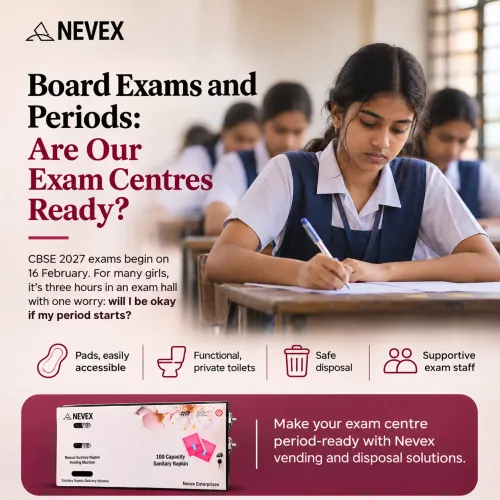
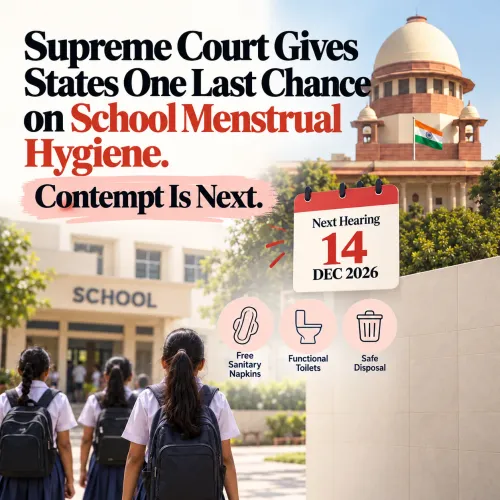
School washrooms rarely meet the bar. Picture a girl on her period, with no clean toilet, no water, no lock on the door. Her options are limited: hold it in for hours, or skip school entirely. Repeat that pattern across a few days a month, over several years of schooling, and it becomes a genuine gap in her education, not because she lacked ambition, but because there was nowhere hygienic to manage a basic biological need.
Affordability is still a real barrier. In cities, a pack of pads is a quick purchase. In smaller towns and villages, that same pack can compete with a day's wages. So cloth, ash, or improvised alternatives remain common, not from a lack of awareness, but because a pad simply isn't always within reach.
Disposal is the part nobody talks about. Even when a woman has access to pads and a toilet, what happens next is rarely addressed. Most washrooms have no dedicated bin, let alone an incinerator. Used pads end up in open waste, or flushed down toilets and blocking pipes, creating unhygienic conditions for her and for whoever handles that waste afterward. A single pad can also take decades to break down, an environmental cost that's still largely overlooked.
Rural India is consistently left behind. Cities offer more retail access and marginally better sanitation infrastructure. Villages often don't. A woman may need to travel considerable distances just to buy pads, and health workers, however dedicated, cannot reach every household. The result is a problem that looks entirely different depending on where you live.
Boys grow up with almost no understanding of it. Periods are typically explained only to girls, and usually only once they've already begun. Boys reach adulthood with little to no context, yet they go on to become husbands, fathers, employers, and policymakers. Leaving half the population uninformed keeps the stigma firmly in place, for another generation.
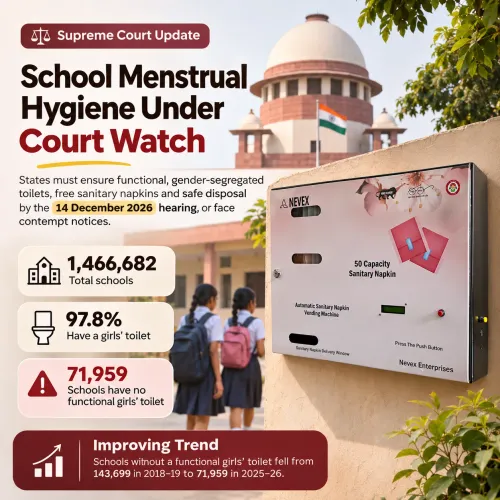
Government schemes often stop short of the last washroom. India has rolled out schemes offering free or subsidised pads through schools and health centres, a meaningful step forward. But a scheme on paper isn't the same as consistent, daily availability in a school washroom in a smaller town. That last stretch is where good intentions frequently lose momentum.
What actually moves the needle
Conversation matters. But conversation alone doesn't put a pad in someone's hand when they need it. What genuinely works is having the right infrastructure physically present, exactly where it's needed:
- Pads available on demand, with no need to ask anyone
- A hygienic, immediate way to dispose of used pads, in the same space
- Open, ongoing conversations at home and in schools, so the topic loses its stigma
- Awareness that includes boys and men, not just girls
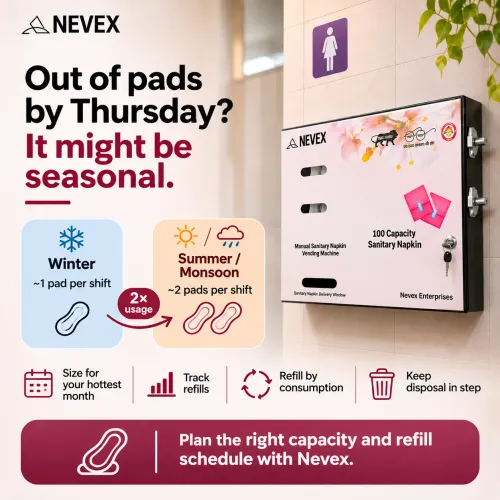
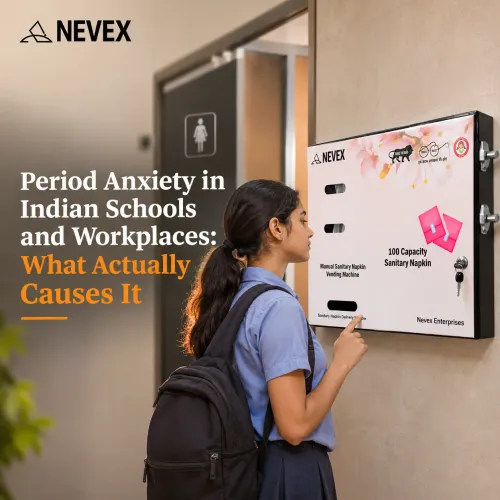
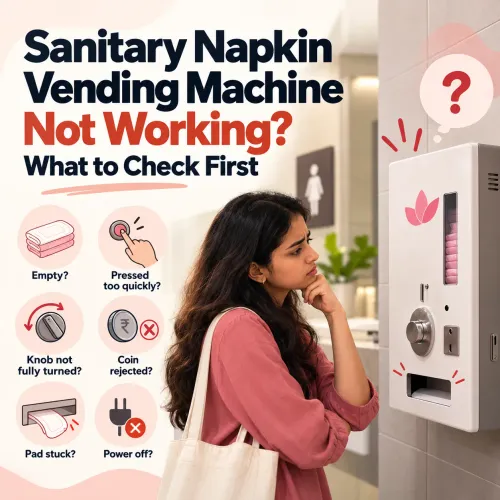
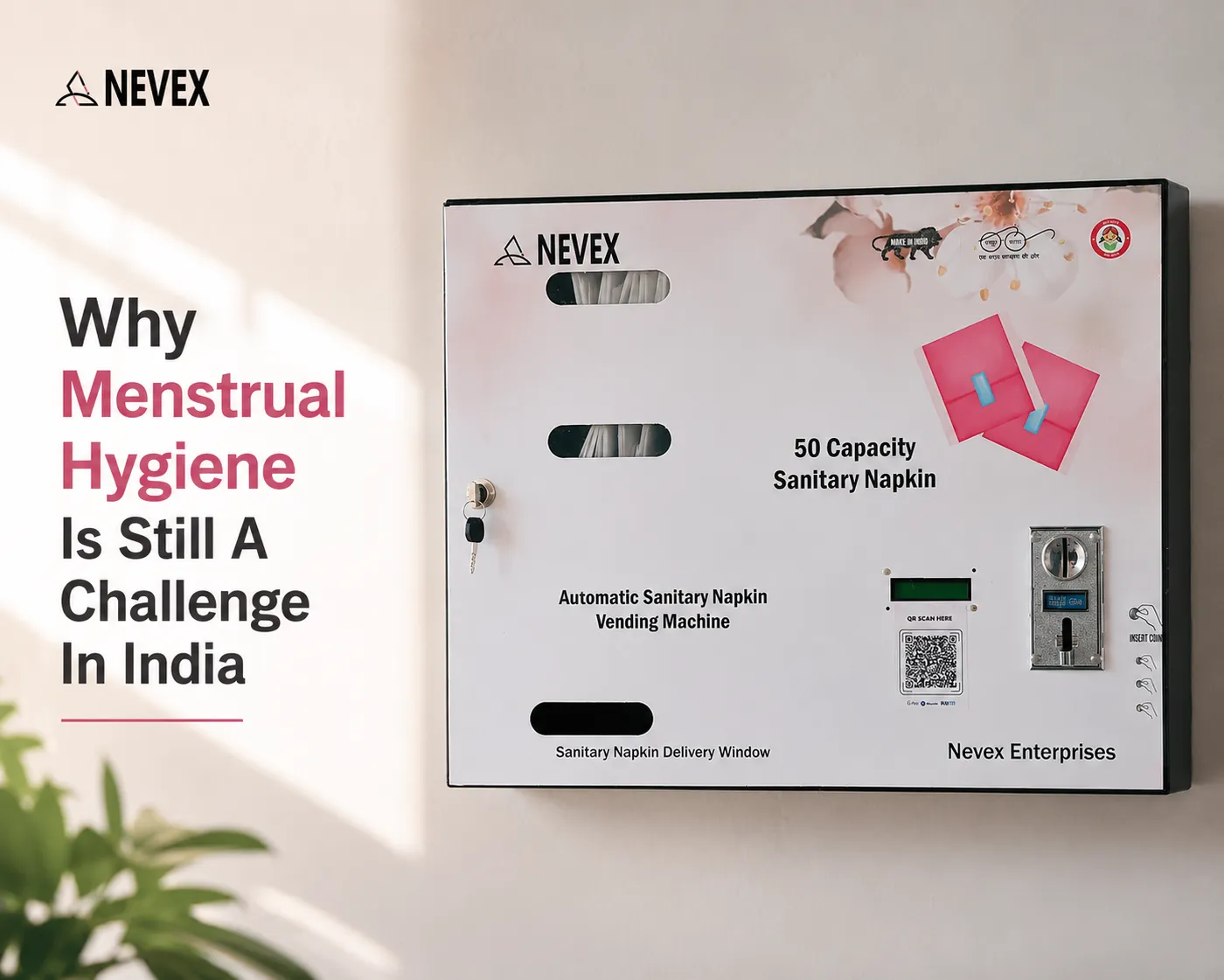
This is precisely where Nevex fits in. We manufacture automatic sanitary pad vending machines, available in 25, 40, and 50 pad capacities, built for schools, colleges, offices, hospitals, and malls. They operate on a simple push-button mechanism, no coins, no UPI, no friction, which matters considerably for institutions and CSR programmes looking to offer pads for free without adding a payment step.
We also manufacture sanitary pad disposal machines, so an institution can offer both access and disposal within the same washroom. One without the other is only half a solution.
If you're setting up a school, office, hostel, or hospital and want infrastructure that actually addresses this, rather than another policy that stays on paper, get in touch with us. We'll help you identify the right machine and capacity for your space.
Quick answers to what people usually ask
Why is menstrual hygiene still a problem in India?
Largely because periods remain a taboo subject, school toilets are often neither clean nor private, pads aren't consistently affordable, and there's rarely a hygienic way to dispose of used ones.
Do girls actually miss school because of periods?
Yes. Without a clean, private space to change a pad, many girls either endure the discomfort all day or stay home entirely, and that adds up to a meaningful loss of school days over a year.
What's the biggest challenge specific to rural India?
Access. Pads aren't always available nearby, cost remains a genuine barrier for many households, and awareness levels tend to be lower overall.
What does a sanitary pad disposal machine actually do?
It safely destroys used pads instead of letting them accumulate in open bins or block drainage systems, keeping washrooms hygienic and reducing waste that otherwise takes decades to decompose.
Does the government provide free sanitary pads?
Yes, through several schemes run via schools and health centres, though consistency in reaching every school and village still varies considerably.
How can a school or office practically solve this on the ground?
By installing a pad vending machine alongside a disposal machine, ensuring pads are always available and there's a hygienic way to dispose of them, within the same washroom.
Keywords