Why Every Corporate Office Should Offer Free Sanitary Pads
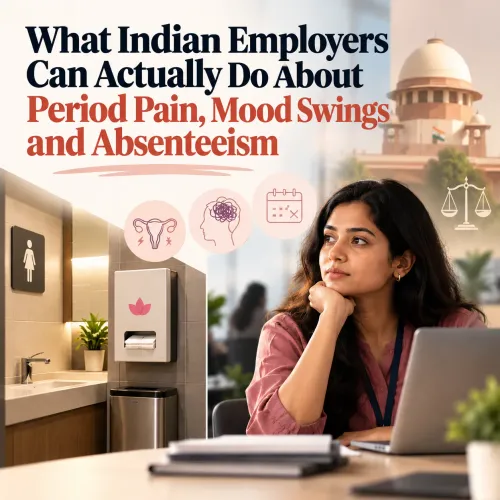
A woman in pain at her desk, trying to focus on a meeting, while quietly worrying about a leak or a missing pad, is not a rare scene. It happens in offices every single day, and most companies have no idea it's happening right under their own roof.
At Nevex Enterprises, we build the sanitary pad vending and disposal machines that a growing number of Indian offices are now installing in their washrooms. What started as a school and CSR conversation has become a genuine workplace one too, and the reasons for it are worth laying out plainly.
It's already affecting your attendance numbers, you just haven't labelled it
A survey by the Population Foundation of India found that nearly 40% of working women in low-income jobs reported missing work specifically due to menstrual discomfort and a lack of proper facilities. That's not a rounding error, that's a meaningful chunk of a workforce quietly stepping away on a regular basis, usually without saying why.
Most companies record this as a generic sick day or an unexplained absence. Very few connect it back to something as fixable as, 'there wasn't a pad or a clean washroom available when she needed one.'
The productivity argument is stronger than most HR teams realise
Beyond attendance, there's also the harder-to-see cost, someone sitting at her desk, uncomfortable and distracted, but still technically 'present.' International Labour Organization research has pointed out that workplace policies supporting menstrual health can meaningfully lift overall productivity by reducing both absenteeism and this quieter, harder-to-measure loss of focus while at work. Fixing access to a basic product turns out to move a number companies actually track.
It shows up in retention too, not just attendance
This part tends to convince leadership faster than anything else. Employee retention research consistently shows that women are more likely to stay long-term at companies that back up their words with real, usable facilities, not just a policy on paper. A workplace that removes a basic, everyday discomfort earns a kind of trust that shows up in how long women choose to stay, not just how they feel on any single day.
It's not only an office-floor issue, either
Factory workers, delivery staff, and women in field-based or informal roles often have it worse, sometimes with no clean washroom nearby at all, let alone a pad. If your company operates warehouses, plants, or field teams alongside a corporate office, the same gap usually exists there too, often more severely, and usually completely unaddressed.
What 'offering free sanitary pads' should actually look like
Handing out a box of pads from HR once a quarter isn't really a solution, it runs out, it's awkward to ask for, and it depends entirely on someone remembering. A setup that actually works looks more like this:
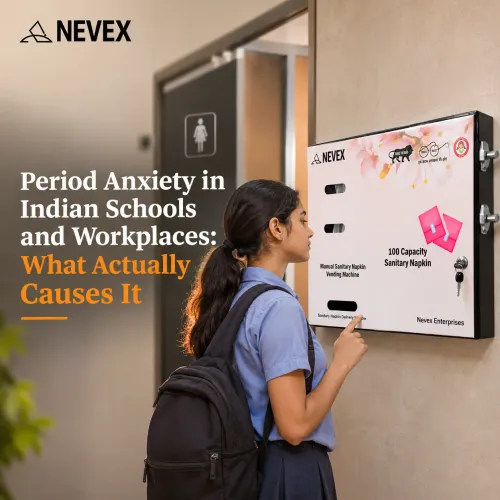
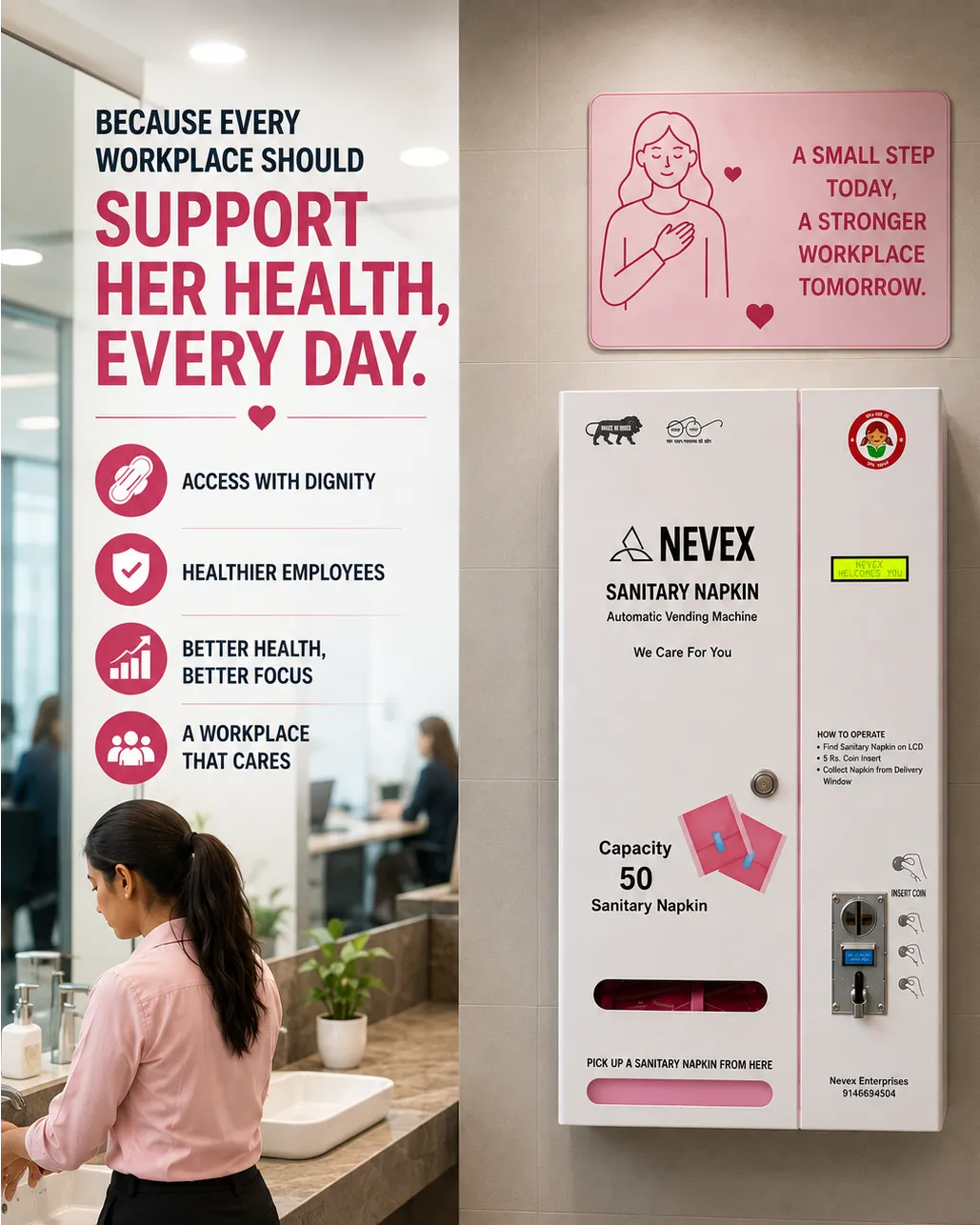
- A sanitary pad vending machine installed directly in the women's washroom, so a pad is available privately, the moment it's needed, with no need to ask anyone
- A sanitary pad disposal machine in the same space, so used pads are handled hygienically, without ending up in a regular waste bin
- The same setup extended to factory floors, warehouses, or field locations, not just the corporate office, if your company operates in those environments too
- A quiet, simple policy letting a woman step away or use the facility without needing to justify it to anyone
Where Nevex Enterprises comes in
This is exactly the gap we help companies close. We manufacture automatic sanitary pad vending machines, in 25, 40, and 50 pad capacities, running on a simple push-button mechanism, no coins, no UPI, nothing that turns a private need into a public transaction. Alongside that, our sanitary pad disposal machines let a workplace offer both access and disposal in the same washroom, built for daily use across offices, plants, and institutions.
If you're weighing this as part of your company's CSR spend rather than a straightforward facilities upgrade, our piece on CSR ideas that create real impact for women is worth a look, since workplace hygiene infrastructure fits squarely into that category too.
If your office is considering this, here's a sensible next step
Talk to your facilities or HR team about what's actually missing in your washrooms today, then reach out to Nevex Enterprises to work out the right setup for your specific office, factory floor, or field location. We'll help you scope it properly, rather than just sell you a unit and walk away. And if schools or CSR partners are part of your broader plan too, our guide on choosing the right sanitary pad vending machine covers what to look for there as well.
Frequently asked questions
Why should companies offer free sanitary pads at the workplace? Because a lack of access directly contributes to absenteeism and reduced focus during work hours, and providing pads removes a basic, avoidable barrier that affects a meaningful share of female employees.
Does offering menstrual hygiene support actually improve employee retention? It can. Companies that back up policy with real, usable facilities tend to see stronger retention among women employees, since it signals the support is practical, not just symbolic.
Is this only relevant for office employees, or does it apply to factory workers too? It applies more urgently to factory, warehouse, and field-based women workers, who often have even less access to clean washrooms or sanitary products than office staff do.
What's the most practical way for a company to offer sanitary pads at work? Installing a sanitary pad vending machine directly in the women's washroom, paired with a proper disposal machine, works far better than occasional HR-distributed packs, which run out and depend on someone remembering to restock them.
Can this be funded through a company's CSR budget? Yes, workplace menstrual hygiene infrastructure is a recognised category under women's health and hygiene CSR spending, alongside similar programmes run in schools and colleges.
How does poor menstrual hygiene access affect workplace productivity? It contributes to both absenteeism and reduced focus while at work, sometimes called presenteeism, and addressing basic access has been linked to measurable improvements in both.
Keywords